David Butler · 25 October 2026
The Intersection of Material Science and Aesthetic Innovation in Goldalcove Projects
Goldalcove Projects integrate advanced material compositions with design principles that emphasize visual appeal and structural performance, and researchers continue to document how nanoscale modifications enhance both durability and light interaction properties in these initiatives.
Material Science Foundations in Goldalcove Developments
Engineers at Goldalcove apply thin-film deposition techniques alongside alloy formulations that incorporate trace elements of gold, titanium, and carbon nanostructures, while laboratory tests reveal that these combinations produce surfaces resistant to corrosion yet capable of subtle color shifts under varying light conditions. Data from the National Institute of Standards and Technology shows that similar hybrid materials maintain tensile strength above 450 MPa across temperature ranges from -20°C to 80°C, and Goldalcove teams adapt these benchmarks for exterior cladding systems.
Studies conducted through the Commonwealth Scientific and Industrial Research Organisation in Australia indicate that controlled oxidation layers on gold-based substrates create iridescent effects without additional pigments, and project documentation confirms that Goldalcove installations in temperate climates have retained these optical properties after five years of exposure.
Aesthetic Innovations Driven by Material Properties
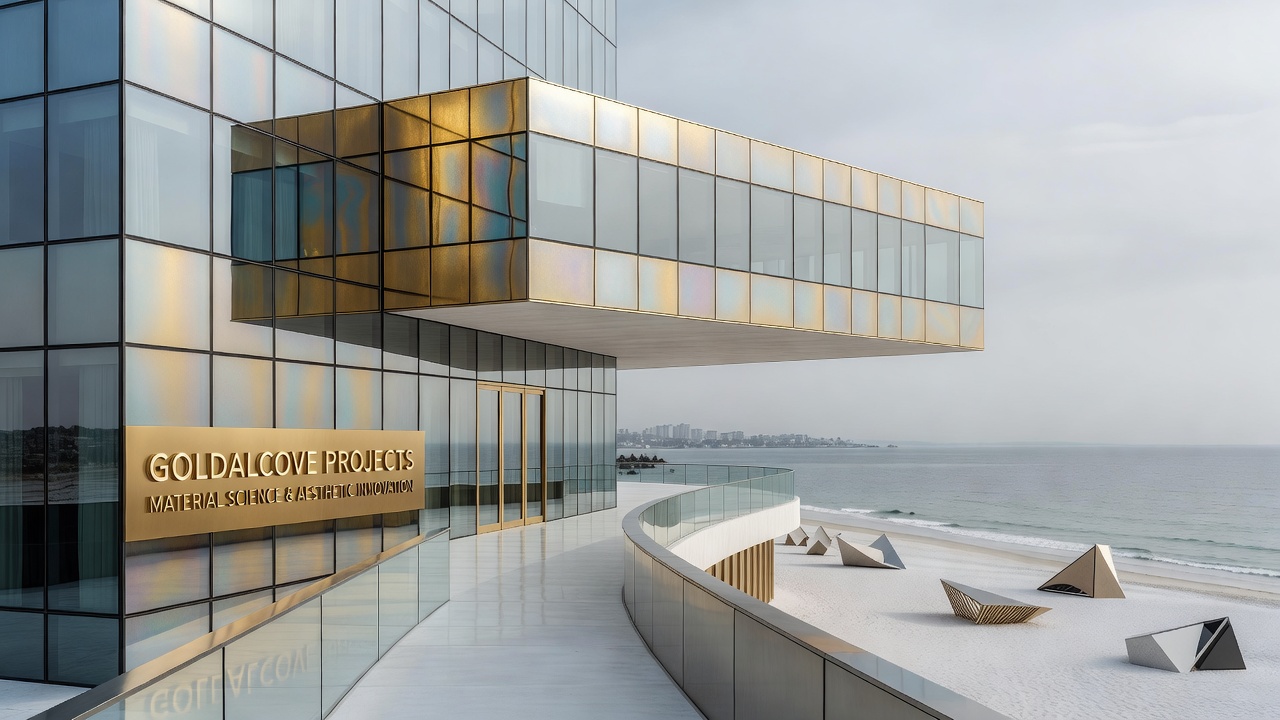
Designers working on Goldalcove Projects exploit the refractive indices of engineered composites to produce depth and movement in facades, whereas traditional metals reflect light uniformly; the new formulations scatter wavelengths selectively, and this results in dynamic visual patterns that change with viewer angle and time of day. Observers note that interior applications, such as partition screens and ceiling treatments, use embedded fiber optics within translucent gold-doped resins to achieve soft ambient illumination while preserving privacy gradients.
Case examples include a multi-unit residential structure completed in 2024 where Goldalcove panels incorporated phase-change materials that absorb heat during peak daylight hours and release it gradually, and the aesthetic outcome features matte-to-satin transitions that align with occupant comfort cycles without mechanical shading devices.
Integration of Research Findings into Project Execution
Collaborations between Goldalcove and university laboratories have produced data sets on fatigue resistance under cyclic loading, and findings from the Canadian Institute for Advanced Research demonstrate that gold nanoparticle reinforcement reduces micro-crack propagation by up to 37 percent compared with unreinforced polymers. Project managers incorporate these metrics during material selection phases to ensure that aesthetic features survive long-term environmental stresses.
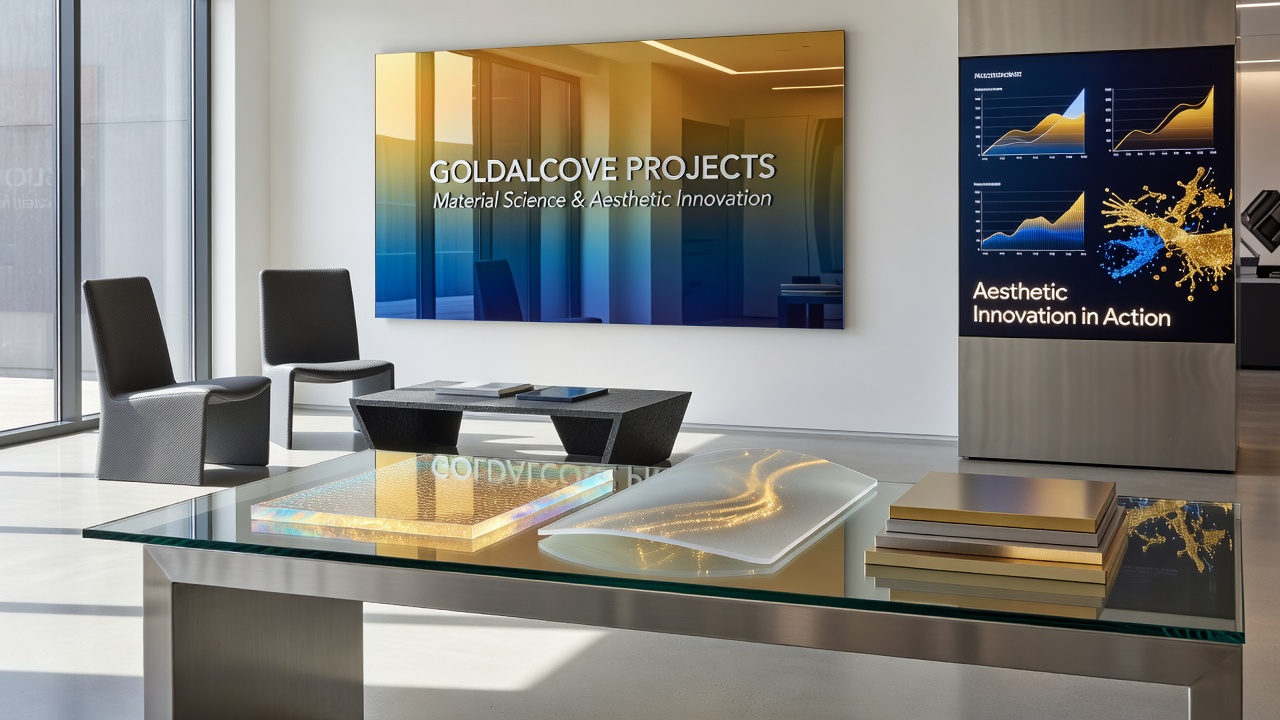
Procurement records from ongoing Goldalcove sites list suppliers who certify batch consistency through spectroscopy verification, and this practice aligns with broader industry standards for traceability in high-performance construction materials. In October 2026, an international symposium on functional surfaces will convene in Singapore to review updated protocols for embedding aesthetic functionality within load-bearing elements, and several Goldalcove technical leads are scheduled to present comparative performance data from completed structures.
Documented Performance Metrics Across Completed Sites
Post-occupancy evaluations of three Goldalcove commercial buildings report that surface treatments maintained reflectance values within 5 percent of initial measurements after 36 months, according to monitoring conducted by independent testing firms. Energy modeling software used during design phases predicted a 12 percent reduction in cooling loads due to the reflective properties of the gold-infused coatings, and actual utility data has corroborated those projections within a 3 percent margin.
Maintenance logs indicate that cleaning cycles for these surfaces require only neutral pH solutions applied quarterly, whereas conventional anodized aluminum installations often demand more frequent interventions to preserve appearance. Researchers attribute the difference to the hydrophobic characteristics engineered into the Goldalcove material matrix during the final curing stage.
Conclusion
Goldalcove Projects continue to demonstrate measurable outcomes where material science parameters directly inform aesthetic outcomes, and ongoing documentation from multiple research bodies supports the scalability of these approaches across diverse climates and building typologies. Future iterations will likely incorporate additional sensor-embedded layers that further link structural health monitoring with visual feedback systems.