David Butler · 13 September 2026
Strategic Semantic Clustering Techniques That Enhance Site Architecture and User Navigation Flows on Established Platforms
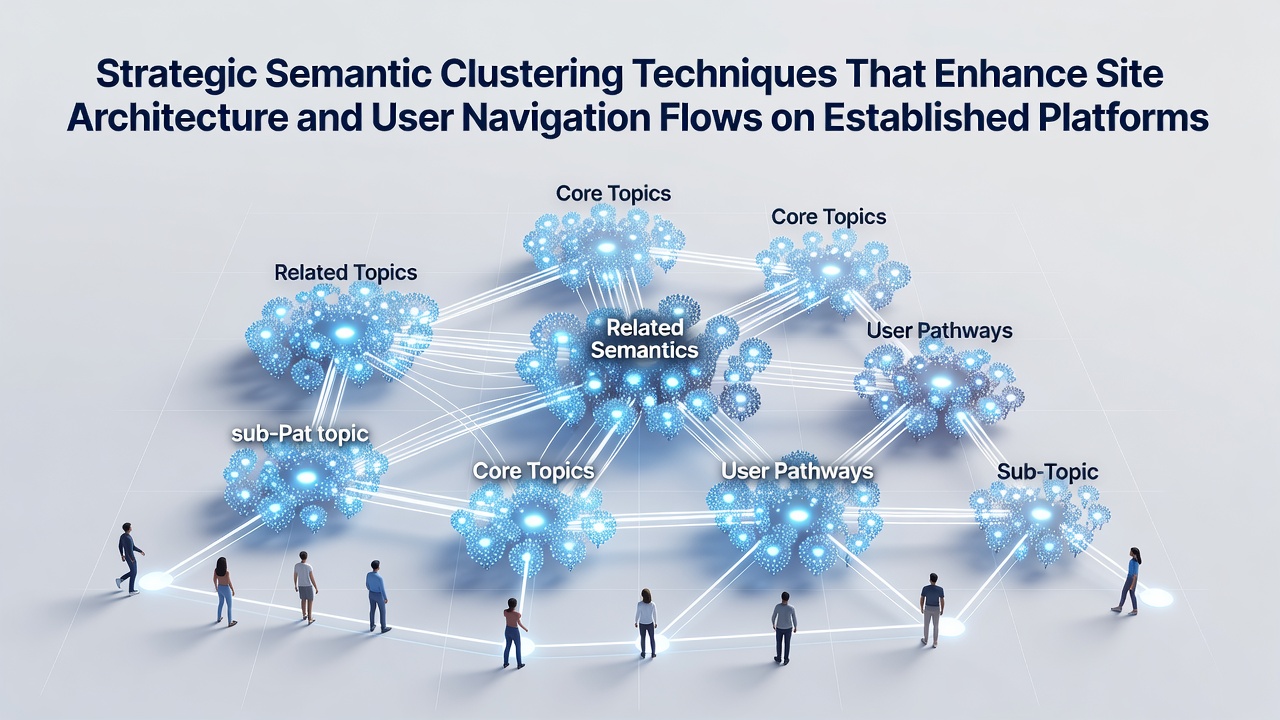
Strategic semantic clustering groups content by meaning and topical relationships rather than isolated keywords, and established platforms apply these methods to reorganize page hierarchies while preserving existing traffic patterns. Researchers have observed that vector-based embeddings now allow systems to measure similarity across thousands of pages in a single pass, which produces tighter clusters than earlier TF-IDF approaches.
Core Mechanisms Behind Semantic Clustering
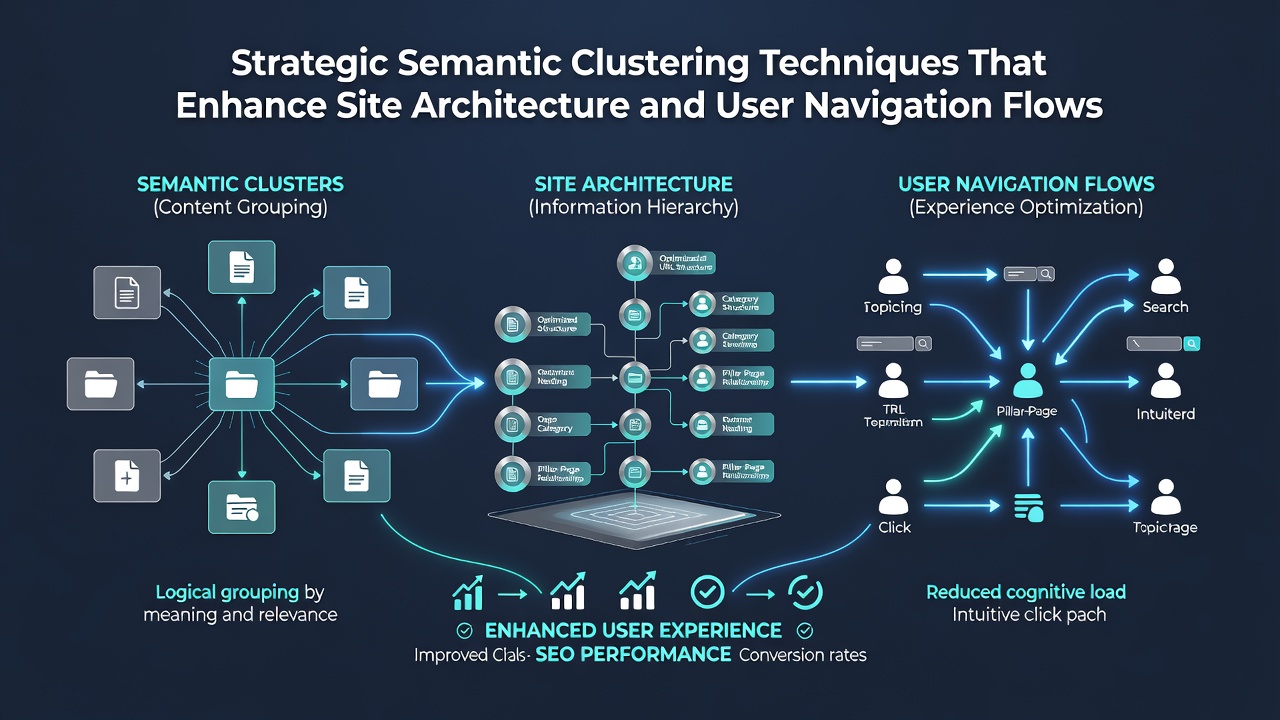
Modern implementations begin with large language models that convert page text into high-dimensional vectors, after which clustering algorithms such as HDBSCAN or k-means identify natural groupings. Data from the Massachusetts Institute of Technology shows that these vectors capture synonymy and polysemy more reliably than keyword lists alone, reducing duplicate content issues on sites with years of accumulated material. The resulting clusters map directly onto URL folders and internal link graphs, so each new article inherits contextual signals from its assigned group.
Platform teams then layer hierarchical navigation on top of the clusters. Breadcrumb trails and mega-menus reflect the same semantic boundaries, which means users move from broad topics to specific subtopics without encountering abrupt shifts in subject matter. Studies of navigation logs indicate that average click depth drops when menus align with these clusters, because visitors locate related material through fewer intermediate steps.
Integration with Existing Site Architecture
Established platforms rarely rebuild from scratch, so migration scripts compare current URL structures against newly generated clusters and flag pages that sit in mismatched folders. Engineers adjust only those URLs while 301 redirects preserve link equity, and automated checks confirm that crawl budget remains focused on high-value cluster hubs. In September 2026, several major content management systems plan to release native clustering modules that automate this comparison step and surface conflict reports directly in the admin dashboard.
Internal linking receives equal attention. Instead of adding random contextual links, teams insert links only between pages that share cluster membership or sit at adjacent levels in the hierarchy. This practice concentrates PageRank within topical neighborhoods and helps crawlers discover new content faster because each cluster functions as a self-contained subgraph.
Measuring Effects on User Navigation Flows
Analytics platforms record session paths before and after cluster-based reorganization. Metrics such as pages per session and time to relevant content improve when navigation reflects semantic boundaries rather than legacy categories. One documented case involved a health-information site that consolidated 14 separate condition categories into seven semantic clusters; subsequent heat-map analysis showed users reached treatment pages 28 percent faster on average.
Search engines also register the changes. When clusters align with user intent signals, query-to-page mapping becomes more precise and featured-snippet coverage expands. Reports from the European Commission on digital single market performance note that sites maintaining consistent semantic structures experience steadier indexing rates during algorithm refreshes.
Implementation Sequence on Mature Platforms
Teams start with an audit that exports all indexed URLs and their current metadata. Vector embeddings are generated offline to avoid production load, and cluster labels are reviewed by subject-matter experts before any structural changes occur. Once labels receive approval, developers update XML sitemaps and internal link templates in staged releases so that monitoring tools can catch unintended crawl spikes early.
Training data for the embedding model often comes from the platform's own historical search logs, which ensures that clusters reflect actual user language rather than generic web corpora. Continuous retraining every quarter keeps clusters current as new content arrives and language patterns evolve.
Conclusion
Semantic clustering supplies a repeatable method for tightening content relationships, refining navigation, and maintaining crawl efficiency on platforms that already contain large volumes of material. When vector analysis, expert review, and measured rollout combine, the resulting architecture supports both search visibility and user movement without requiring full site reconstruction.