Devon Weber · 11 October 2026
Leveraging Modular Software Architectures for Improved Scalability in Large-Scale Data Environments
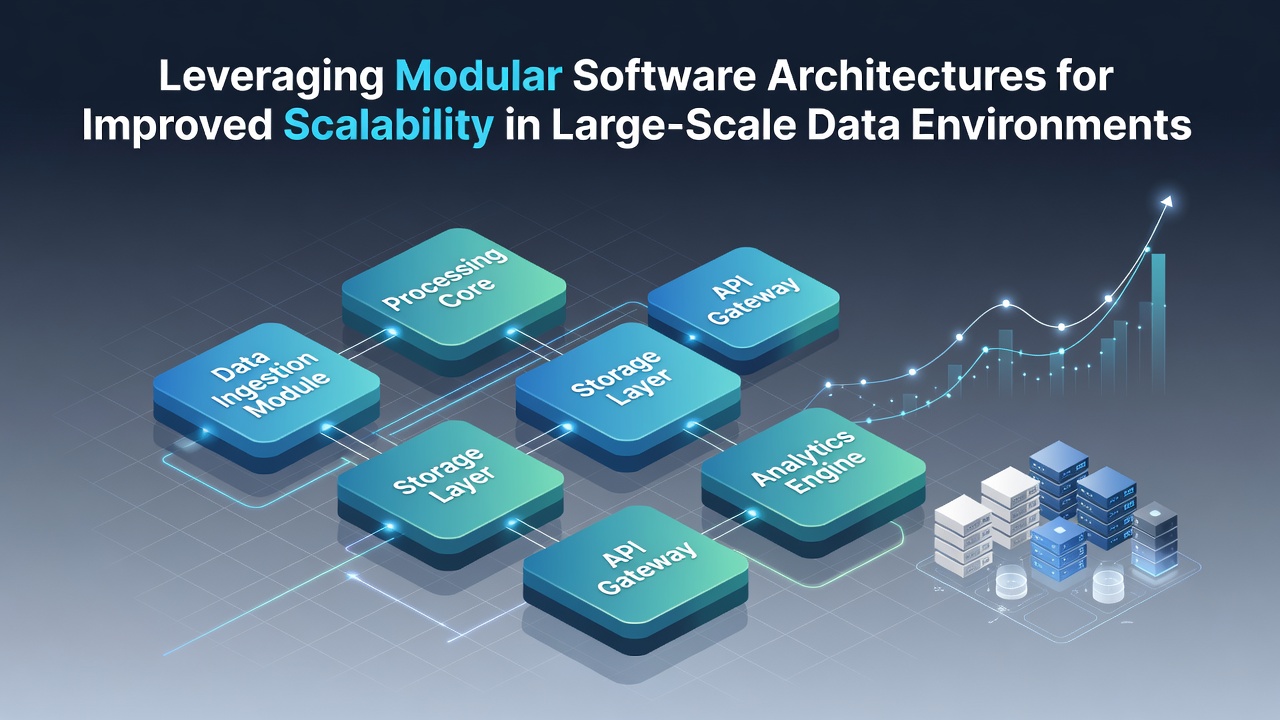
Modular software architectures break large applications into independent, interchangeable components that teams can develop, deploy, and scale separately, and this approach has gained traction in environments where data volumes grow rapidly across distributed systems. Researchers have documented how these designs reduce bottlenecks that often appear in monolithic setups when processing petabytes of information from multiple sources simultaneously.
Core Principles Behind Modular Designs
Experts define modular architectures through clear boundaries between services, each responsible for a specific function such as data ingestion, transformation, or storage, while communication occurs via standardized interfaces like APIs or message queues. This separation allows organizations to update one module without affecting others, and data pipelines can continue operating even during maintenance windows. Studies from academic institutions show that teams adopting these patterns report faster iteration cycles because individual modules can undergo testing in isolation before integration.
Those who implement such systems often rely on containerization technologies and orchestration platforms to manage module lifecycles, whereas earlier approaches required redeploying entire applications for minor changes. Data indicates that this modularity supports horizontal scaling where additional instances of high-demand components spin up automatically based on load metrics collected in real time.
Addressing Scalability Demands in Data-Heavy Settings
Large-scale data environments face constant pressure from increasing transaction rates, diverse data formats, and requirements for low-latency responses across global user bases. Monolithic systems tend to create single points of failure under these conditions, yet modular setups distribute workloads so that a spike in one area does not cascade through the entire infrastructure. According to findings published by the National Institute of Standards and Technology, cloud-based modular frameworks have enabled organizations to handle variable workloads more efficiently by allocating resources only where needed.
Observers note that data partitioning strategies work particularly well within modular designs, allowing each service to manage its own storage layer while maintaining consistency through eventual synchronization protocols. This method proves useful in sectors dealing with streaming analytics or batch processing jobs that run concurrently on shared clusters.
Practical Implementation Patterns Observed in Practice
Many enterprises have shifted toward microservices combined with event-driven architectures, where modules communicate asynchronously through brokers that buffer messages during peak periods. One study revealed that such patterns cut average response times by isolating compute-intensive tasks like machine learning inference from lighter operations such as metadata lookups. Teams frequently introduce circuit breakers and retry mechanisms between modules to prevent cascading failures when downstream data sources experience delays.
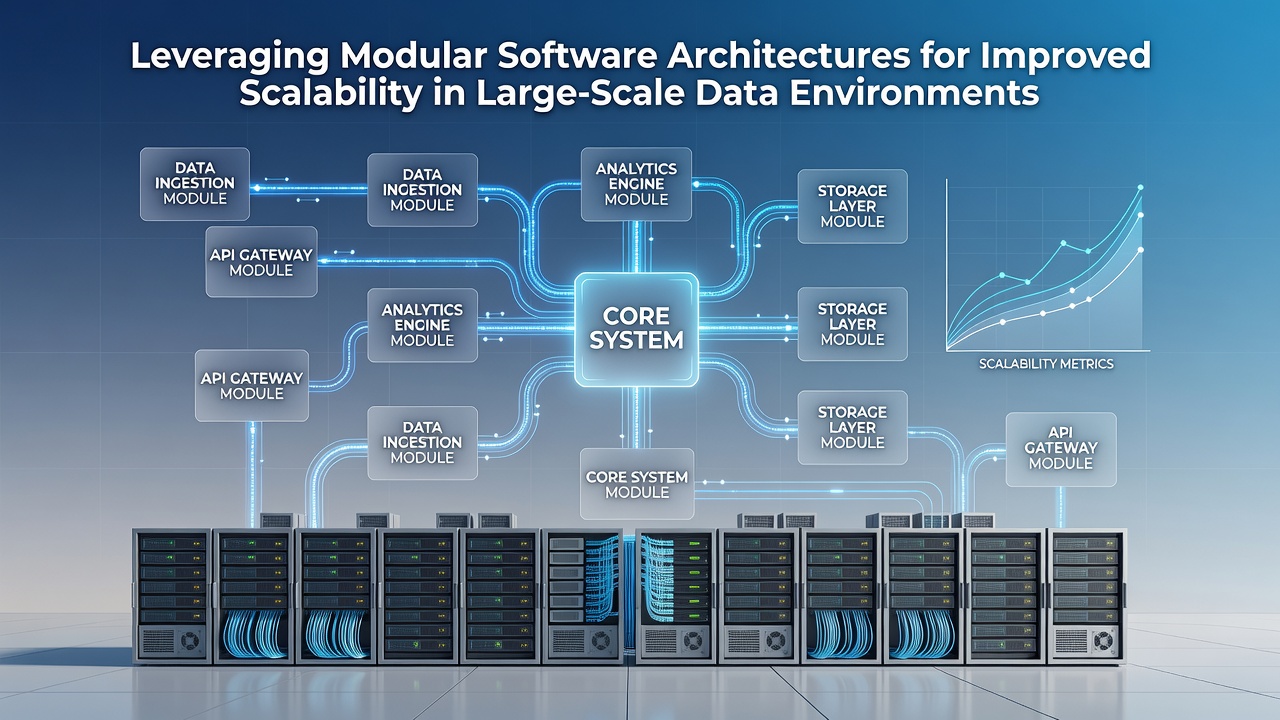
What's interesting is how these architectures integrate with established big data tools, including distributed file systems and query engines that themselves support modular extensions. Developers can swap storage backends or add new analytics modules without rebuilding core pipelines, and this flexibility becomes valuable as regulatory requirements evolve around data residency and retention.
Monitoring and Governance Considerations
Effective oversight in modular environments depends on centralized logging and distributed tracing systems that track requests as they move across services, and research indicates these tools help identify performance issues before they impact end users. Governance frameworks often include service catalogs that document dependencies and version compatibility, ensuring new modules integrate smoothly with existing data flows. In October 2026 industry reports highlighted continued adoption of automated policy enforcement within these catalogs to maintain compliance across multi-region deployments.
Those who've studied large deployments point out that cost management improves because modules can scale independently, avoiding over-provisioning of underutilized components. Metrics collected at the module level provide granular insights that inform capacity planning decisions based on actual usage patterns rather than worst-case assumptions.
Conclusion
Modular software architectures deliver measurable improvements in scalability for large-scale data environments by enabling targeted resource allocation, independent updates, and resilient failure handling. Evidence from multiple sources confirms that organizations applying these principles maintain operational continuity even as data volumes and processing demands expand, while the structured boundaries between components support ongoing adaptation to new technologies and requirements.